How to get a 5-star food hygiene rating
A food hygiene rating is not a reward for luck — it is a score you can plan for, and mostly control. If you are stuck on a 2 or a 3 and want a 5, the gap usually comes down to things you can fix: cleaning, records and routine.
Here is the direct answer. To get a 5, you have to score well in the three areas the inspector marks: how you handle food, how clean and well-kept your premises are, and how confidently you can prove your systems work. Get all three right and a 5 is realistic — not lucky.
What does a food hygiene rating actually measure?
The Food Standards Agency runs the Food Hygiene Rating Scheme (FHRS), which gives your business a score from 0 to 5 after a visit from your local authority's environmental health officer (EHO). A 5 means "very good"; a 0 means "urgent improvement necessary".
The rating is not one score — it is built from three separate judgements:
- Hygienic food handling — how you prepare, cook, cool, chill and store food, and how you avoid cross-contamination.
- Cleanliness and condition of the premises — the state of the building and equipment: surfaces, floors, walls, ventilation, pest-proofing and layout.
- Confidence in management — how well you can show, on paper, that you keep the first two under control day after day.
Knowing exactly what the inspector is looking at changes everything. Our guide to what an EHO inspector looks for walks through the visit in detail.
Area 1 — Food hygiene: get the daily basics right
This is the part most kitchens already know, but consistency is where scores are won or lost. Keep raw and ready-to-eat foods separated, colour-code boards and cloths, cook and reheat to safe temperatures, chill quickly, and check and record fridge and freezer temperatures. A simple, followed system — such as the FSA's Safer Food, Better Business pack — is exactly what an inspector wants to see in action, not just in a drawer.
Area 2 — Cleanliness and condition: the part cleaning wins outright
This is where professional cleaning moves the needle fastest, because it is judged on the physical state of the kitchen. Grease behind the range, a grimy extract canopy, tired floor grout and dirty fridge seals all count against you — and they are all fixable.
Two jobs do most of the heavy lifting:
- A full deep clean that reaches behind and under equipment, not just the surfaces you see. Work through our commercial kitchen deep cleaning checklist so nothing is skipped, and see the deep cleaning cost guide for what to budget.
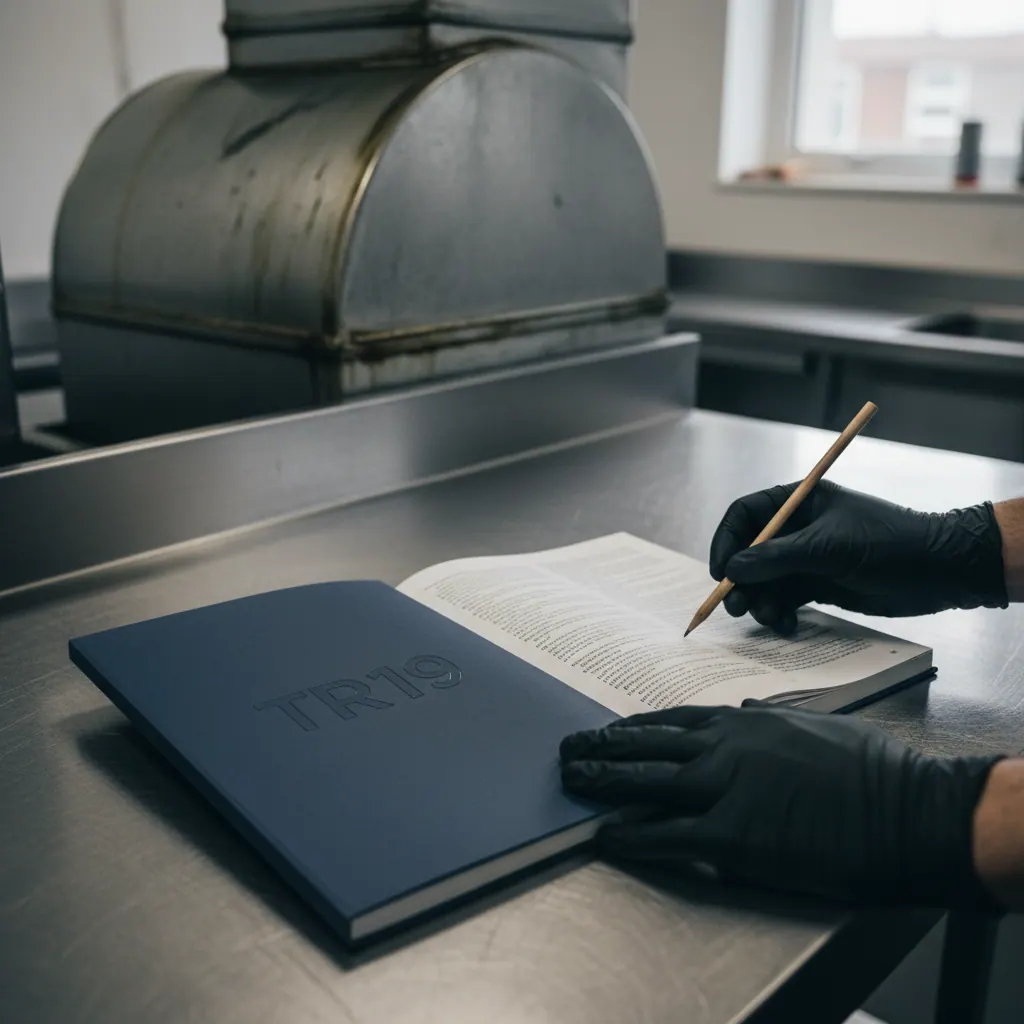
- A kitchen extract (duct and canopy) clean to the TR19 Grease standard. Heavy grease in the extract is both a fire risk and a visible hygiene failure. Our explainer on what TR19 is and the extract cleaning regulations cover why it matters and how often it is needed.
The point most operators miss: cleanliness is the one area you can improve on demand. You cannot rewrite last month's temperature logs, but you can book a deep clean and an extract clean this week and walk the inspector into a kitchen that scores.
Area 3 — Confidence in management: prove it on paper
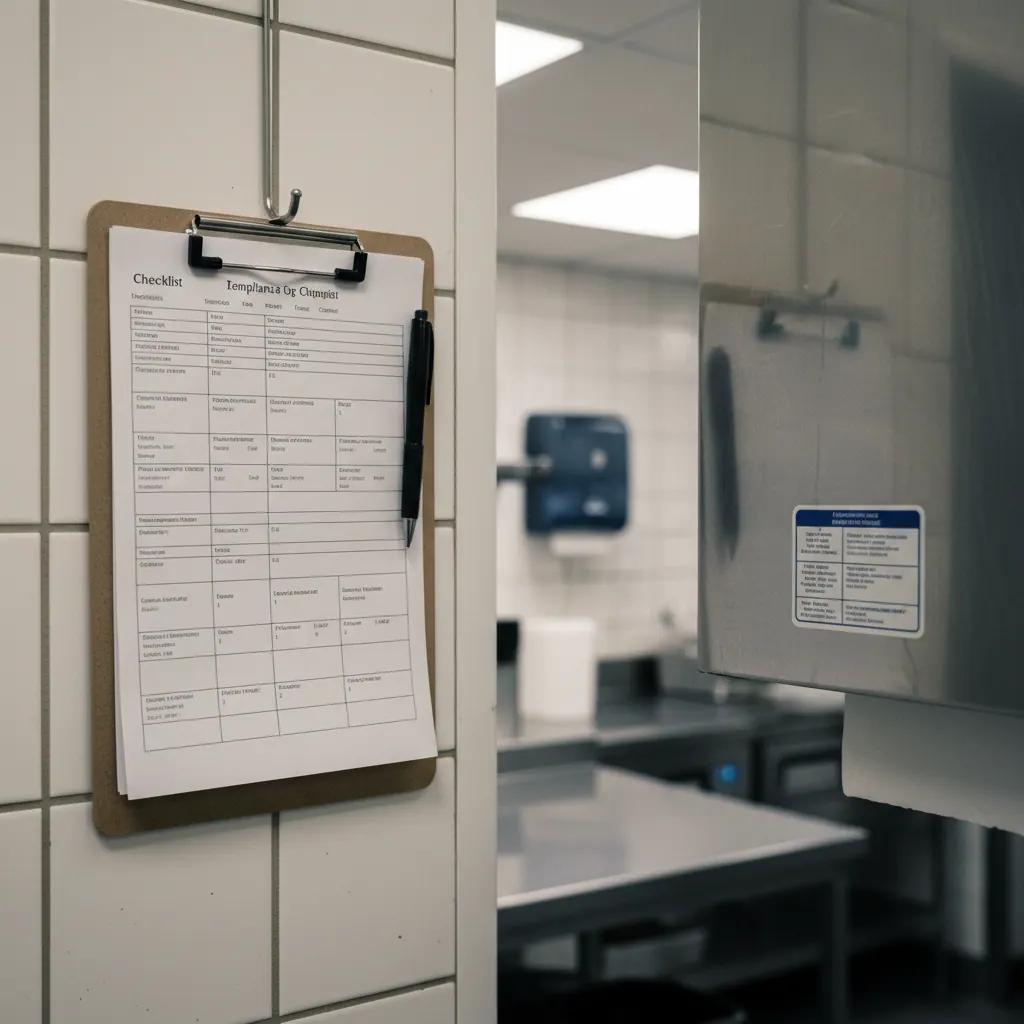
The third score is about trust. The inspector is asking: "will this kitchen still be doing the right thing next month, when I'm not here?" You answer that with records. Keep a cleaning schedule that is signed off, temperature logs that are actually filled in, a food-safety diary, staff training notes, a pest-control record, and — crucially — your TR19 certificate after each extract clean.
That certificate is a genuine trust signal: it is documented, dated proof that a fire-and-hygiene risk has been professionally managed, which is exactly the kind of evidence that lifts the "confidence in management" score (and which your insurer or landlord will often ask for anyway).
Step by step: how to move from a low score to a 5
- 1. Audit against the three areas. Walk your kitchen as if you were the inspector, scoring food handling, cleanliness and paperwork honestly.
- 2. Fix the daily hygiene basics and make sure the system is followed on every shift, not just when someone is watching.
- 3. Book a full deep clean and an extract clean. This is the fastest visible win, and it resets the "cleanliness and condition" score.
- 4. Get your paperwork in order — cleaning schedules, temperature logs, training records and your TR19 certificate, all current.
- 5. Do a pre-inspection clean and mock check before your revisit, so nothing is left to chance.
- 6. Request a re-rating once the improvements are in place (see below).
What if you already have a low rating?
A low score is not permanent. You have a right to reply that is published alongside your rating, and — once you have genuinely made improvements — you can request a re-visit and re-rating from your local authority (there may be a fee, and there are limits on how often you can ask). The smart move is to fix the fundamentals first, then invite the inspector back into a kitchen that is clearly a 5.
If a revisit is looming, an EHO pre-inspection clean and a booked deep clean are the quickest way to make sure the cleanliness score is not what holds you back. A clean kitchen is the one part of the rating you can guarantee before the inspector arrives.