Kitchen extract cleaning — canopy, plenum, ductwork and fan
End-to-end extraction system cleaning for commercial kitchens — meeting BESA TR19 grease compliance and your insurer’s policy wording.


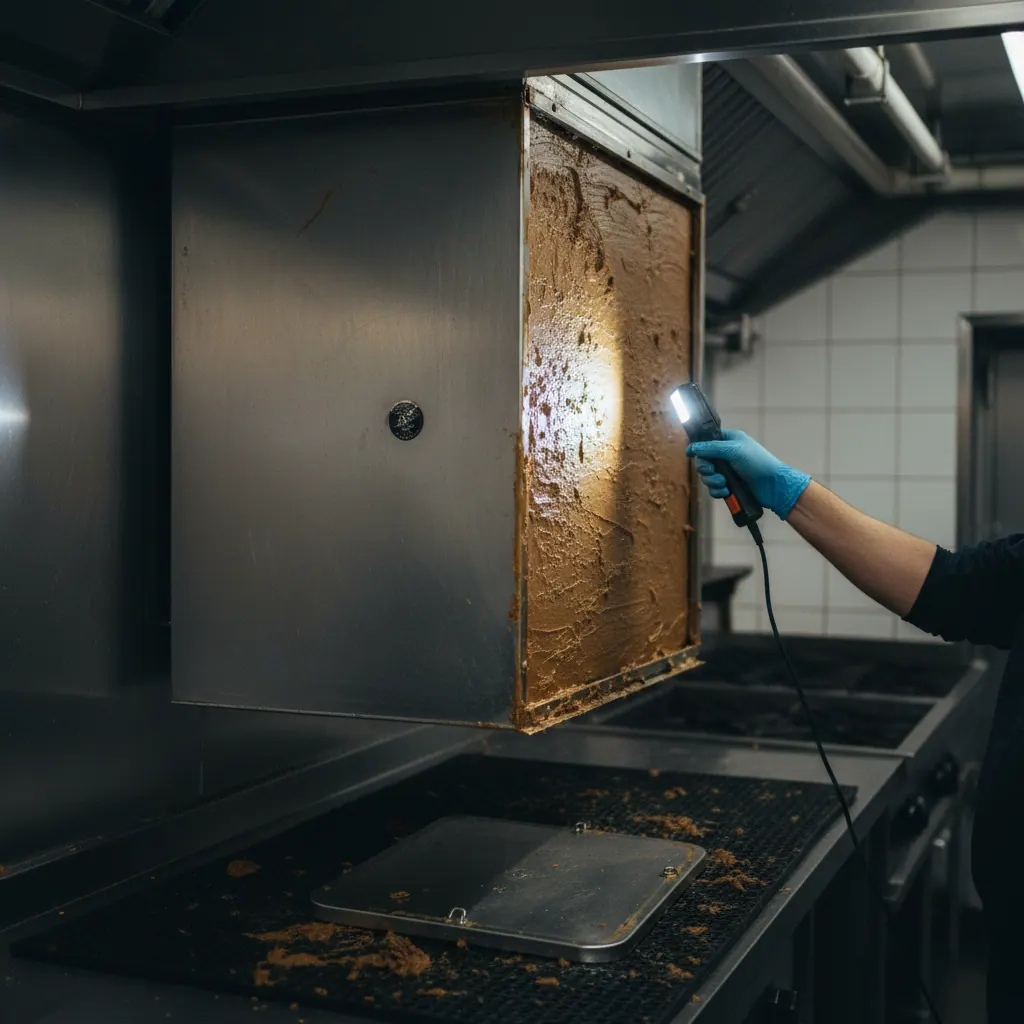
Grease build-up in kitchen extract systems is the single most common cause of commercial kitchen fires. We clean the whole extraction system — from the canopy underside, through the plenum and filters, into the vertical and horizontal ductwork, all the way to the extract fan — and issue a TR19-aligned post-clean certificate.
Every visit, every time.
- ✓Canopy underside, baffle filters and plenum chamber cleaned
- ✓Vertical and horizontal ductwork accessed and cleaned along its full length
- ✓Roof-mounted or in-line extract fan blade and housing cleaned
- ✓Pre- and post-clean photographic evidence at every access point
- ✓Wet film thickness (WFT) grease measurements before and after
- ✓Post-clean certificate aligned to the BESA TR19 grease specification
- ✓Access panels installed if missing (priced separately on quote)
From enquiry to sign-off.
- 1. Site survey
We inspect the system from canopy to fan, identify all access points, and flag any panels that need installing for full coverage. Quote within 48 hours.
- 2. Overnight clean
Our TR19-trained engineers work through the system overnight — mechanical agitation, chemical degreasing and manual brushing through every section.
- 3. Certificate and report
You receive a dated certificate, before/after photographs at every access point, and WFT measurements as evidence for your insurer.
£895–£2,800+ outside London · £1,195–£3,500+ in London · Small system (café/pub) from £895 (£1,195 London); medium system (restaurant) from £1,495 (£1,895 London); large system (hotel/multi-kitchen) from £2,800 (£3,500 London). Quoted by ductwork length, vertical risers, fan access and access panel count after a 30-minute site survey.
Prices shown exclude VAT. London rates apply within the M25. All other UK cities use standard rates.
Get a fixed-price quoteFrequently asked questions
How is extract cleaning different from canopy cleaning? +
Canopy cleaning covers the visible hood and baffle filters only. Extract cleaning covers the whole system — canopy plus ductwork plus fan. Insurers require the full system cleaned to TR19 specification, not just the canopy.
How often should the extract system be cleaned? +
BESA TR19 sets frequency by usage: heavy use (12+ hours/day) — every 3 months; moderate (6–12 hours/day) — every 6 months; light (<6 hours/day) — every 12 months.
What is a wet film thickness reading? +
A WFT gauge measures the depth of grease residue on the duct interior in microns. TR19 sets thresholds: below 200μm is acceptable; above is non-compliant. We measure before and after and include both in your report.
Do you install access panels? +
Yes — many older systems lack the panels needed for full TR19 inspection. We can install BESA-spec panels during or before the clean. This is priced separately on the quote.
Will my insurer accept your certificate? +
Our certificates carry BESA TR19 references, dated photo evidence at every access point and WFT readings. Major insurers (Aviva, AXA, Allianz, RSA, Zurich) recognise this as documentary evidence of compliance.
Related services
TR19 cleaning
TR19-specification kitchen extract and ductwork cleaning for insurance and EHO compliance. BESA-trained engineers, photo evidence, post-clean certificate.
TR19 certificate
What a TR19 certificate is, what it must contain, what it costs, and how to obtain one. Issued same-week with photo evidence and WFT readings.
Kitchen canopy cleaning
Commercial kitchen canopy and baffle filter cleaning. Note: canopy cleaning alone is not TR19 compliance — see our extract cleaning service for that.
Get a quote for extract cleaning today
Same-day quotes across London and major UK cities. Most extract cleaning jobs scheduled within 48 hours.